October 16, 2025
“Use the heart of leaving the world to do the work of entering the world.”
A Chinese saying
Dear Friends,
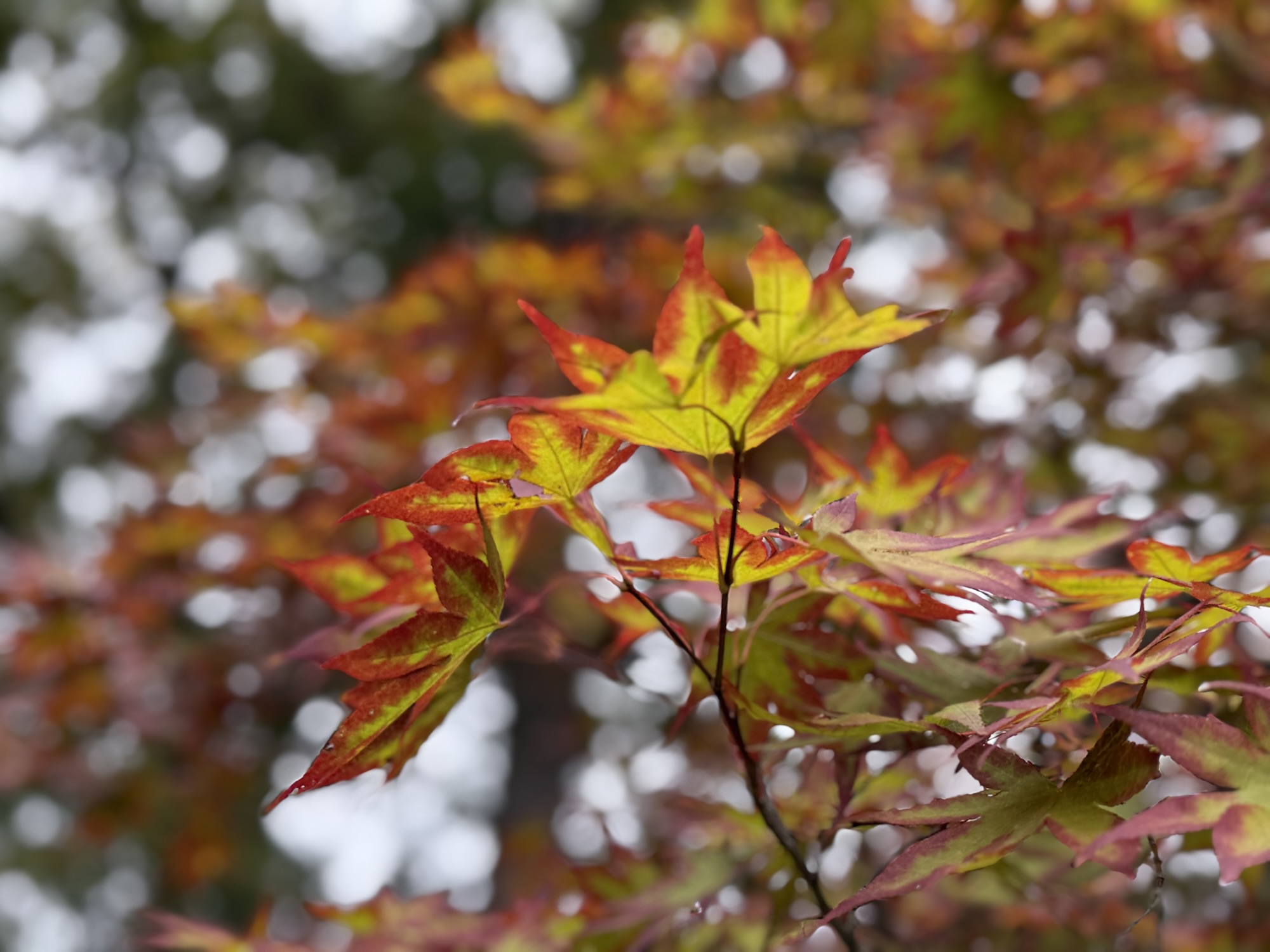
How are you? The foliage is turning gloriously in upstate NY the last two weekends. One of weekends I attended a retreat called “Sacred Bridge: Uniting the Heart of the Amazon and the Peaks of the Himalayas” at Menla. It brought together the leaders of the Amazonian tribe Yawanawá and members of the Tibetan community to share what it means to preserve and protect the rich heritage of indigenous cultures in today’s world. It gave me hope and optimism as I listened to the young generation discuss activism and how they carry their culture forward. I am still processing this experience and will share more when I can articulate it in words.
Since writing last month about cultivating creativity through curiosity, I have been sitting with the a quote by Elizabeth Gilbert, where she believes that one’s motivation to create art or writing does not need to be rooted in helping others. That idea initially feels liberating—but overtime, it didn’t quite resonate.
In our “information junk food” age, where so much of our information and emotions is manipulated by algorithms, thoughtful writings are antidotes to headline-grabbing snippets. I can write anything privately to cultivate my creative practice, but hopefully what I share publicly can offer value and insights to others. It doesn’t mean that it needs to be serious in tone or topic, or to take myself too seriously, but art is a form of communication and creates vibration when shared communally. I would like to set the intention of not contributing to an information junk food ecosystem to the best I can.
Recently, during a teaching with Tuere Sala, a student asked: “Why do we practice in times like these? Isn’t it selfish to sit in silence and do nothing?”
It prompts me to explore that question. In fact, why do I have any spiritual practice at all? One quick answer is impermanence. As I arrived at midlife, when I know my time on Earth in this precious human body is limited, I appreciate the preciousness of my life energy more, and I want to bring meaning to the time I have left. In both Buddhism and in Chinese philosophy, the word “cultivation” means a lot. It is about how we show up in our daily life, to ourselves, to others, and how we change our inner world so we can contribute to the outer world.
It is clear that we are living in a troubled world and chaotic times. As we are bombarded with news and events, when I contemplate the question “Why do I practice in these times?” I could only say that I need to practice to cultivate clarity, resilience and stability. The more chaotic the world becomes, the more I need to practice to stay present and clear.
This Chinese saying, “Use the heart of leaving the world to do the work of entering the world” has been around since the Song dynasty (960–1279). It’s loosely attributed to Cheng Hao (1032-1085), who wrote an essay called “Settling One’s Nature” where he articulated how to engage the world and yet not get overwhelmed by it. It blends the Confucian wisdom of being highly engaged in the world, and the Buddhist wisdom of observing the world with an untangled heart.
This simple saying can be read in many ways. One reading invites us to engage the world with a wide view and an untangled heart—to hold power and fame not for its own sake, but as a way to serve. It asks us to step fully into the world to take our responsibilities, yet not be swept away by it or get lost in it. The Taiwanese master Sheng Yen articulated in this way,
“If you are just trying to escape the world and avoid your responsibilities in the world, you are not ‘leaving the world,’ you are ‘avoiding the world.’ If you are creating chaos and confusion when you engage in the world, then you are not “entering the world”, you are ‘creating chaos in the world.’ If someone is engaged in study and research in the mountains, and the results of that study or research benefit the world, then even when the person is in the mountains, the person is still contributing to the world’s work. The person is both being out of the world and doing the work of the world. Similarly, if one spends time cultivating one’s mind and heart, and could then bring clarity, compassion and wisdom to the world, then one is leaving the world so that one can serve the world they are in.”
I think of this saying often these days. How do we engage in this chaotic world with a clear mind? I recently learned about Charles Lee’s pioneering work in environmental justice. For almost 50 years, Charles Lee has engaged in environmental justice, when the movement didn’t have its name yet, when it was not in the mainstream consciousness, including those who work in the environmental field.
Lee engaged in community work since his 20s, and went on to publish a landmark study in 1987 that showed a strong correlation between the location of U.S. hazardous waste dumps and the racial makeup of nearby communities. As the environmental justice movement gained momemtum, he joined the EPA during the Clinton years. Through the last 26 years, with ups and downs through many administrations, he kept pushing the environmental justice work forward, and it became EPA’s central mission in the Biden years. He engages with this work strategically and always thinks about what the movement needs in 10 years. It is a long term game.
“One legacy of environmental justice is that the movement does not depend on whether you have the support of the federal government,” Lee said. “It is driven by people, it is not driven by an executive order.”
At 74, as Lee retired from the EPA this year, at a time when funding of environmental justice is crawling back, Lee remained optimistic. He will be teaching at the Howard University School of Law and will share his experiences and learnings with the young generation who are passionate about this field.
I was deeply touched by Lee’s story. What allows someone to dedicate their life to a cause, with all its ups and downs? I’d imagine that there might be moments when it looks bleak, when it’s frustrating and disappointing and hopeless, when it’s full of doubt. Yet, somehow he keeps going regardless of the external environment and conditions. To sustain that kind of effort over five decades, one needs to cultivate resilience, faith, perseverance, patience and on a practical level, strategic thinking. In my experience, a sustained spiritual practice lays the ground to help create conditions for these qualities to emerge.
Hope you journey forward with what nourishes you this fall. Trees learn to shed leaves every fall to let go of what they don’t need and hunker down to their essence, so they can withstand the cold winter. May we let go of what we no longer need and discern what is essential to us. May you enjoy the brilliance of this shedding process.
Blessings and love,
Lin
What nourished my spirit this past month:
- Leaving EPA Behind, Environmental Justice Pioneer Preaches Hope Amid Trump Cutbacks
- My friend Anne-Marie Brest wrote a great piece on reframing the climate crisis: From Crisis to Possibility: Inviting a Civilizational Shift by Displaying Our Green Badges
- Teacher: Tuere Sala
- Event: Sacred Bridge: Uniting the Heart of the Amazon and the Peaks of the Himalayas
Photo: Chuang Yen Monastery, Carmel, NY, October 2025.
GoFundMe: 2025 -2027 Spirit Rock’s Community Dharma Leadership Training
Pay it forward: I’ll be joining the next Community Dharma Leadership (CDL7) training at Spirit Rock Meditation Center. This program includes five retreats over two years and costs ~$14,000. Your contribution will help me cover these expenses. No contribution is too small—every donation is deeply appreciated. Thank you for your support!